
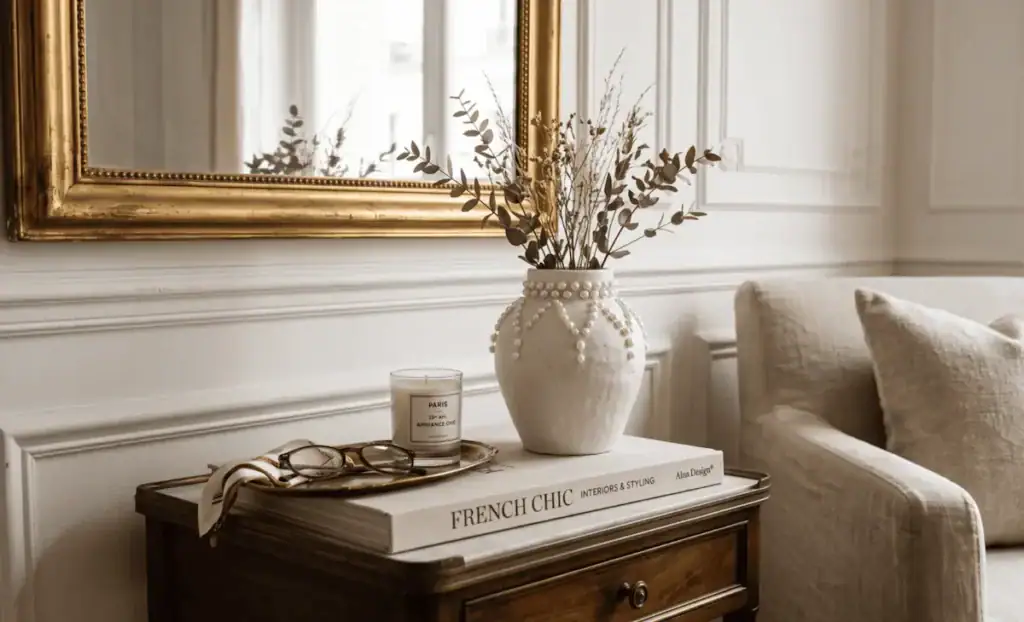
Most newly designed homes today lean heavily on predictable formulas: matched furniture sets, mirror-image layouts, and rooms staged purely for photos.
French interiors break that mold. Instead of chasing a sterile showroom look, they embrace character—pairing soulful, collected pieces with bold modern forms, and favoring living history over catalog perfection.
For interior designers and decorators, this approach is where real value lies. It pulls you out of the cycle of chasing fast trends and gives you the tools to create layered, timeless spaces clients are actually willing to pay for.
1. What Defines French Interior Design? The Art of Effortless Chic and Contrast
French design isn’t anchored to trends; it’s shaped by l’art de vivre—the idea that a home should feel lived in, not staged for an appraisal.
The core principle is simple: make high-end design feel effortless. Instead of the uniform palettes and matched sets common in showroom builds, French decorators introduce deliberate tension across the space:
- Clashing eras: Balancing severe, ultra-modern furniture—like brushed steel, smoked glass, or poured concrete—against aged architecture, exposed limestone, or worn reclaimed wood.
- Sculptural lighting: Dropping a sharp, minimalist mobile chandelier into an organic or textured room to serve as a focal point.
- Tactile layering: Breaking up the clean lines of contemporary seating with heavy linens, imperfect bouclé, and textiles hunted down at vintage markets.
Patina over Perfection
A French interior never looks like it was bought in an afternoon. It feels assembled across generations. A weathered raw-oak table, a mirror with foxed mercury glass, or stacks of worn architecture books aren’t just decor—they anchor a room in time. For modern designers, sourcing pieces with history is the cleanest way to break away from generic, catalog-heavy interiors.
2. Cultural Clout: Why Affluent Clients Invest in French Aesthetics
The enduring pull of French design isn’t driven by social media cycles. It carries centuries of decorative authority.
When Louis XIV centralized France’s master craft guilds, he turned decorative arts into a geopolitical statement. That influence quickly shaped the Western definition of luxury. By the late 19th-century Gilded Age, prominent American dynasties weren’t looking for trendy local decor; they were importing Parisian architects, salvaged 18th-century boiseries, and decorative bronzes to give their New York and Newport estates an instant sense of pedigree.
That dynamic remains unchanged today. Anyone with a generous budget can buy an expensive, pristine furniture suite. But investing in a layered, French-influenced interior signals something money alone can’t fake: cultural literacy, an eye for provenance, and a refusal to settle for fast-fashion luxury.
That dynamic remains unchanged today. Anyone with a generous budget can buy an expensive, pristine furniture suite. But investing in a layered, French-influenced interior signals something money alone can’t fake: cultural literacy, an eye for provenance, and an understanding of historical tension—the exact skill set taught throughout our Certified Interior Decorator curriculum.
3. Beyond Paris: Regional French Vernacular That Translates Anywhere
French design doesn’t end at the boulevard Périphérique. Its regional traditions provide rich, adaptable palettes that translate seamlessly into contemporary homes worldwide—from California coastal properties to desert retreats.
The French Riviera: Mid-Century Mediterranean Modernism
Moving far beyond generic nautical decor, this aesthetic channels the modernist Côte d’Azur:
- Sculptural craft: Organic ceramics (echoing the Vallauris craft movement), bent rattan, and patinated bronze set against smooth terrazzo or pale limestone floors.
- Graphic simplicity: Low-slung lounge furniture, clean wrought-iron accents, and sun-bleached canvas textiles designed for seamless indoor-outdoor living.
Modern Provençal: Tactile Restraint
Forget rustic lavender clichés. Contemporary Provençal style is grounded in brutalist simplicity and raw materials:
- Architectural weight: Dry-stacked stone walls, massive reclaimed timber, and reclaimed terracotta pavers balanced by ultra-thin steel window frames.
- Unprocessed textures: Heavy unbleached linens, untreated oak, and oversized artisanal pottery that bring depth to open-concept spaces without decorative clutter.
4. The Business Case: Why French Aesthetics Command Higher Fees
Mastering this design language isn’t just an artistic choice; it directly changes how you price and position your studio:
Attracting design-literate clients: High-budget clients don’t want a cookie-cutter interior they’ve already seen across their social feeds. Offering an authentic, layered European perspective immediately sets you apart from local competitors running the same predictable formulas.
Portfolio longevity: Because French interiors rely on provenance and architectural contrast rather than micro-trends, your projects don’t look dated three years later. A portfolio built on timeless layers continues to win you clients long after seasonal fads fade.
Moving beyond commodity procurement: When your work relies on standard retail catalogs, clients will price-shop you online. When you source vintage pieces, balance eras, and specify custom finishes, you shift from a purchasing agent to an irreplaceable curator—justifying premium flat fees and design retainers.
ALNA Design® Certification: Become a Certified Interior Decorator & Spatial Designer
Good taste gets you noticed, but professional methodology is what gets you hired and paid.
The Become a Certified Interior Decorator & Spatial Designer program by ALNA Design® is an intensive, 4-month online curriculum built to help you master high-end residential interiors. Rooted in the French Art de Vivre, this training goes beyond surface-level decoration, teaching you how to craft spaces that look beautiful, function flawlessly, and deeply nurture the people living in them.
Core Curriculum:
- Spatial Design & Architectural Flow: Move beyond furniture placement. Learn how to optimize floor plans, manage scale, improve sightlines, and translate classical proportions into modern open-plan living.
- The French Art of the Mix: Confidently bridge centuries and styles. Master the rules of tension and balance—layering rare vintage finds and bespoke upholstery with contemporary silhouettes without creating visual clutter.
- Well-Being & Conscious Luxury: Design for the senses and the planet. You will learn how to integrate natural light, tactile raw materials, and biophilic principles to create healthy, restorative environments. By focusing on longevity, antiques, and artisan craftsmanship, you will offer a high-end circular design approach that modern luxury clients actively seek.
- Trade Sourcing & Vendor Networks: Navigate high-end procurement beyond consumer retail. Learn how to work with heritage fabric houses, understand custom millwork, and manage artisan trades to deliver truly bespoke results.
- Studio Operations & Premium Pricing: Package polished client presentations, present tactile material trays, and structure your design fees (flat-rate and retainer models) to build a profitable, independent studio anywhere in the world.
Designed to fit around professional schedules, this program gives you the technical confidence, portfolio foundation, and business clarity needed to launch your design practice.
Frequently Asked Questions
French modern interior design is an aesthetic philosophy that blends historical architectural elements (such as ornate plaster moldings, marble fireplaces, and herringbone floors) with sleek, minimalist contemporary furnishings, vintage accents, and neutral, textured palettes.
Yes. Our 4-month online certification program provides comprehensive training in spatial planning, styling principles, historical curation, and business practices, allowing students worldwide to gain recognized credentials and launch their own design practices.
Absolutely. The program teaches universal principles of spatial harmony, furniture sourcing, and high-end residential decorating. Our graduates successfully apply these methods to properties across the United States, the UK, Australia, the Middle East, and beyond.
In many jurisdictions, including the United States, interior designers typically handle structural alterations, building codes, and structural modifications (often requiring NCIDQ certification or state licensing). Interior decorators focus on spatial aesthetics, furniture sourcing, color schemes, lighting, fabric selection, and overall home styling — an accessible and lucrative career path that does not require a four-year architectural degree.
Upon successfully completing the program and passing your final portfolio review, you receive the Certified Interior Decorator u0026 Spatial Designer credential from ALNA Design®, certifying your mastery of design principles and the French Method®.
Step Into Your Signature Aesthetic
Residential design doesn’t need another decorator copying Pinterest boards. The market needs professionals who understand architectural friction, historic depth, and the art of living well.
If you are ready to build a high-end practice rooted in timeless European design, join the next cohort of ALNA Design®.

More from the blog
Become a Certified Interior Decorator | French Design
Read moreOct
How to Become an Interior Decorator: Self-Teaching vs. Certification
Read moreSep
What Is a Paint Color Consultant? (And How to Become One)
Read moreAug